Time to Talk: why opening up feels hard - and why humour matters
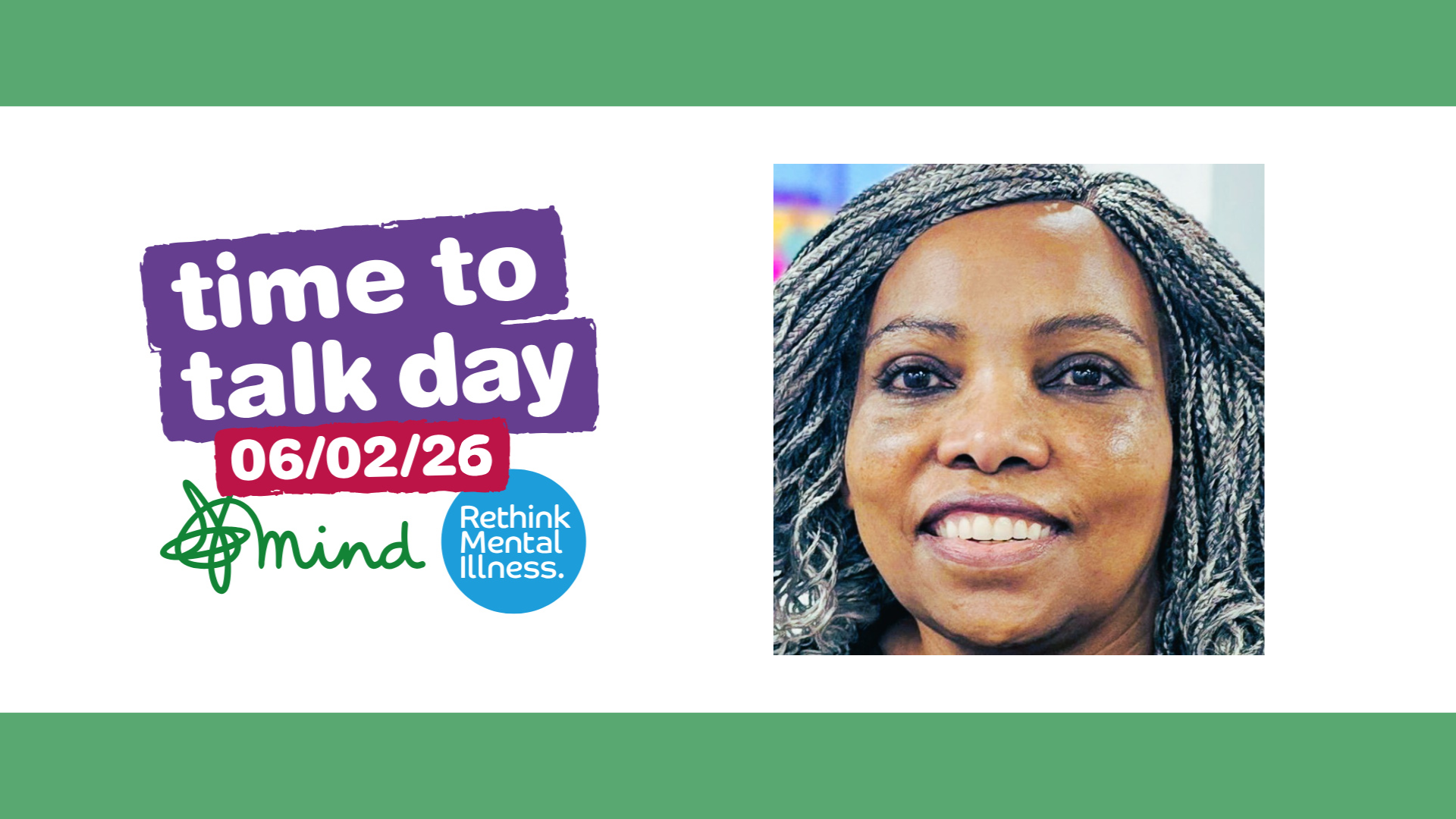
Nish-Muthoni Matenjwa, Business & Programme Manager, is a CLCH Mentor & Mental Health Minder, as well as a co-chair of the Women’s Network. She shares her experience for Time to Talk Day.
Every year, Time to Talk Day reminds us of the importance of having real, honest conversations about mental health. But every year, I also find myself thinking about the same thing: If talking really is so important, why do so many of us still find it so hard to do?
Of course, stigma is part of it. We’ve known for years that stigma creates powerful barriers that stop people from asking for help. UK mental health organisations highlight that stigma involves damaging labelling, stereotyping and exclusion, and these attitudes can prevent or delay people from seeking help or speaking openly about what they’re going through.
But the more I speak with colleagues, friends, and my own family, the clearer it becomes that there’s something else at play too - something quieter, more personal, and sometimes harder to admit.
It’s the fear of being vulnerable.
For many people, the difficulty isn’t just, “Will others judge me?” It’s, “What will they see if I let them in?”
Even large-scale studies describe this tendency: people often conceal their mental health struggles because they fear being perceived as weak, incapable, or “not coping,” particularly by those closest to them. Structural and public stigma feed directly into these fears, reinforcing the sense that disclosure could change how others see them. And the World Health Organisation (WHO) further illustrates how a mental health label can overshadow a person’s identity, making them worry they’ll no longer be seen for who they are, but instead defined by their condition. When that diagnosis intersects with protected characteristics such as race, gender, disability, or sexuality, the consequences escalate quickly, pushing people into further silence.
So, we stay quiet. We smile. We say, “I’m fine.” “I’m good.” We choose safety over openness. And the truth is: vulnerability is scary, even with the people who love us.
I think about this often in my own family. We are a family where humour is woven into absolutely everything, including the serious stuff. If there is an awkward topic, someone will inevitably break the tension with a joke. Not to dismiss the issue, but to soften the edges. That blend of care and laughter is how we let each other know: You’re safe here. You can say what you need to say, and we’ll make space for it…and possibly also roast you lovingly while we’re at it.
And maybe that’s part of the point. When a conversation feels hard, humour can be the thing that opens the door just enough for honesty to slip through. It doesn’t solve everything — and it doesn’t replace real support — but it can make vulnerability feel just a little less frightening. When we laugh, we connect. When we connect, we feel safer. And when we feel safer, talking becomes possible.
So, on Time to Talk Day, I think the message I want to share most is this: Talking about mental health isn’t only about removing stigma. It’s about building environments, at work, at home, in our communities, where vulnerability feels welcome.
Where people know that being honest won’t make others step back, judge them, or look at them differently.
Where there’s room for tears, truths, and yes… even a bit of humour.
Because openness doesn’t happen by accident. It happens when we actively create spaces where people don’t feel like they’re risking their identity, their dignity, or their place in the group simply by saying, “Actually, I’m struggling.”
So, whether your family communicates through heartfelt conversations, gentle check-ins, or (like mine) a mixture of affection, chaos, and several questionable jokes - keep talking. Keep listening. Keep showing one another that vulnerability isn’t a weakness. It’s simply human.
You can find external support from charities and mental health organisations on the Mind website.