Ramadan: What it means for our staff and service users
Ramadan is the holiest month in the Islamic calendar and is observed by Muslims around the world. This year, Ramadan is expected to begin around 18 February 2026, depending on the sighting of the moon, and will last for 29 or 30 days.
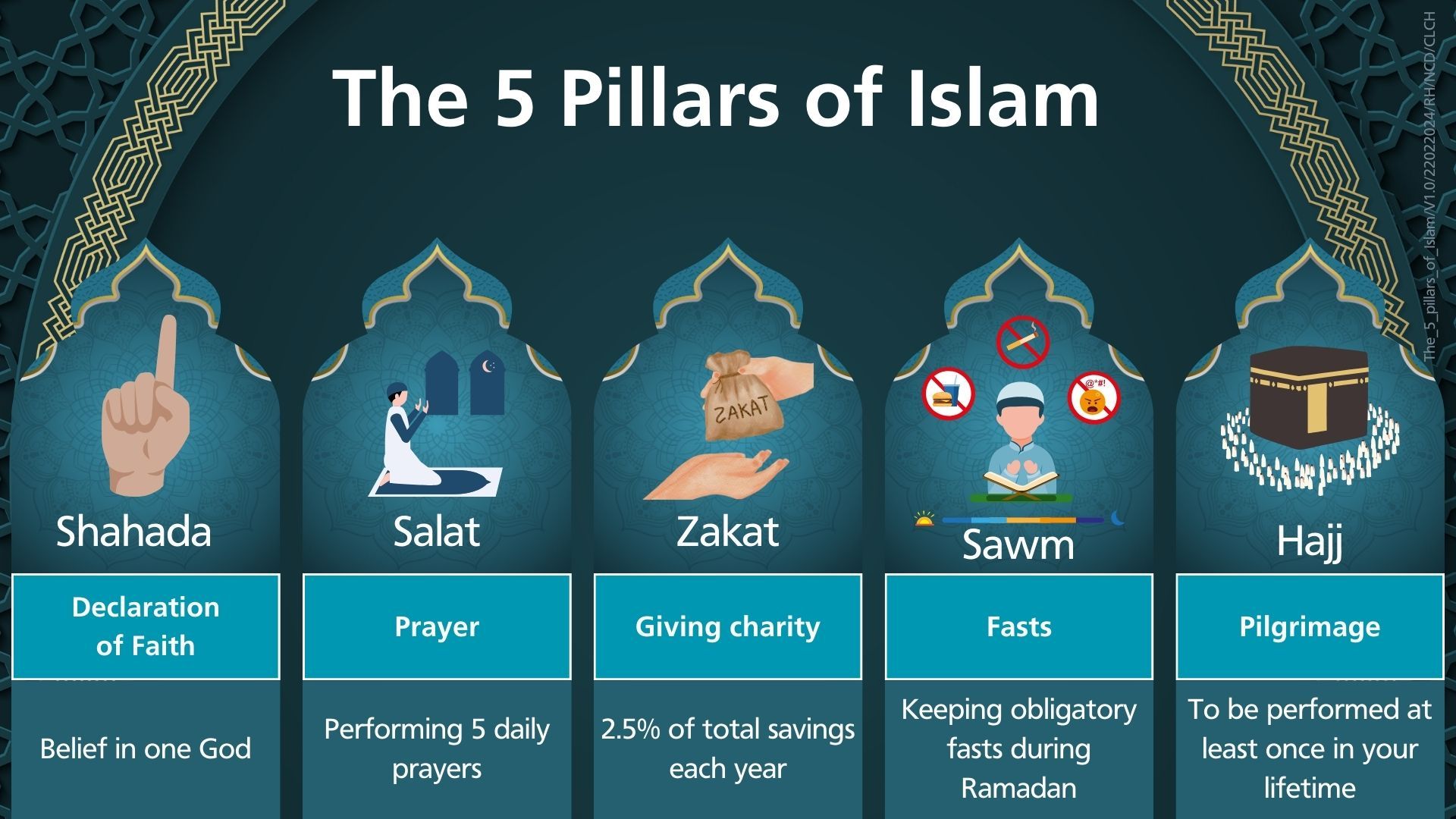
Islam is built on five key practices known as the Five Pillars of Islam. Fasting during the month of Ramadan, known as Sawm, is the fourth pillar. It is ordained in the Holy Qur’an and is a deeply personal act of worship, helping Muslims strengthen their relationship with God.
Fasting during Ramadan is required for all healthy Muslims who have reached puberty. However, exemptions are made for those whose health may be affected, including people who are ill, pregnant, breastfeeding, or living with long-term health conditions.
Any missed or broken fasts should be made up at a later date. If this is not possible, a charitable donation known as fidyah can be given instead. These donations, provided as food or money, help support people in need.
Many NHS staff and service users who observe Ramadan will fast each day, abstaining from food and drink, including water and medication, from sunrise to sunset. Ramadan, however, is about much more than fasting. It is a time for self-reflection, prayer, and spiritual growth, as well as an opportunity for families and communities to come together. The month ends with the celebration of Eid-ul-Fitr.
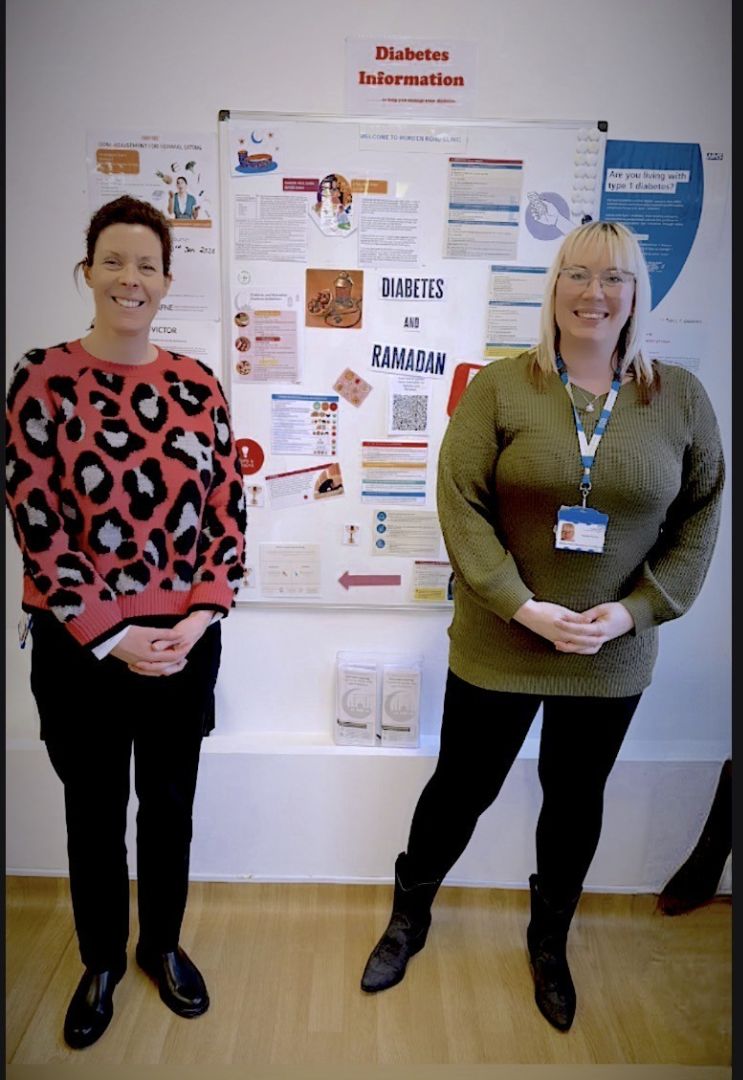
At Morden Road Clinic, Wendy Parker, Reception Co-ordinator and Portia Gray, Diabetes Administrator created Ramadan information board for all patients with diabetes wishing to fast. This information is a helpful and practical guide to fasting with diabetes.
The photo below features Denise Mantle, Diabetes Specialist Nurse (left) and Wendy Parker, Merton Clinic Reception Coordinator, Merton Adult Therapies on the right.
Resources on managing diabetes while fasting during Ramadan are available on the NHS England website. These can be shared with patients and service users to ensure their health and well-being.
Additionally, The Royal College of Speech and Language Therapist published “An SLTs guide to navigating Ramadan.”
This guide gives an overview of Ramadan and its significance, including:
Considerations working with patients and families during Ramadan (including swallowing assessments, medication, working with patients with Eating disorders, Learning disabilities and Neurodivergence).